Holographic Transparent Cabinet
Holographic Transparent Cabinet — See the future, within reach
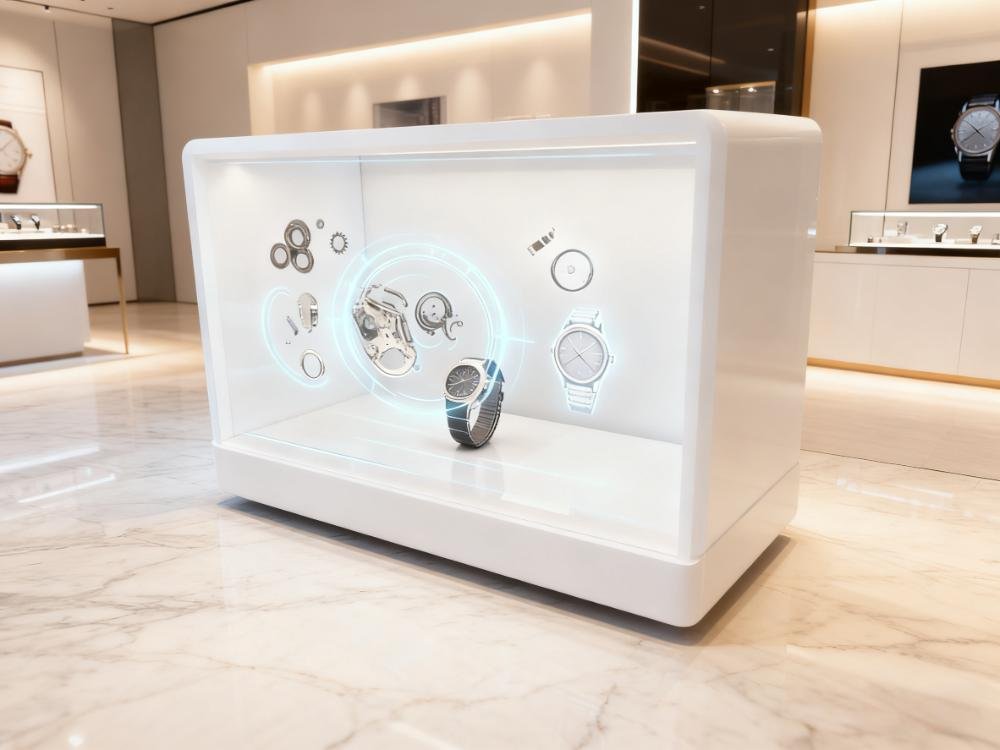
Say goodbye to traditional dull displays! The holographic transparent cabinet places your products on a sci-fi stage where the virtual and real blend. It switches freely between transparent and opaque, turning static displays into dynamic narratives, and captures every gaze with an unprecedented visual impact.
Basic Configuration Overview
| Component Category | Core Components & Functional Description |
|---|---|
| 🖥️ Display System | • Core Component: Transparent Display Screen • Key Parameters: High transparency (typically ≥75%), high brightness (≥1500 nits), high contrast ratio • Installation: Typically floor-standing or ceiling-mounted, integrated into custom cabinet |
| 💻 Media Host | • Core Component: Compact media player or high-performance mini PC • Key Functions: Stores and plays display content, controls screen operation and content scheduling • Connection: Connects to transparent screen via HDMI/DP interface |
| 🎬 Content Production | • Core Principle: Content must be designed with transparent background, featuring prominent main elements and ample blank space to maintain transparency • Formats: Supports common video (MP4, MOV) and image (PNG with alpha channel) formats |
| 🔧 Cabinet & Structure | • Core Structure: Custom metal or high-strength acrylic frame for securing and supporting the transparent screen • Display Platform: Used for placing physical exhibits, creating interaction with virtual content on screen • Lighting: Built-in LED ambient light strips to enhance technological appeal and display effect |
| 🔊 Audio System (Optional) | • Core Component: Built-in or external speakers • Function: Plays content narration, background music, or interactive sound effects |