
There was a time when sliding screens were merely “moving information boards” in museums. Today, they have quietly evolved. By integrating transparent displays, precision linkage mechanisms, and artificial intelligence (AI), they have transcended their role as simple display devices to become “intelligent entities” capable of redefining spatial storytelling.
The Core Trio of Technologies Powering the Evolution
This evolution is driven by the fusion of three key technologies:
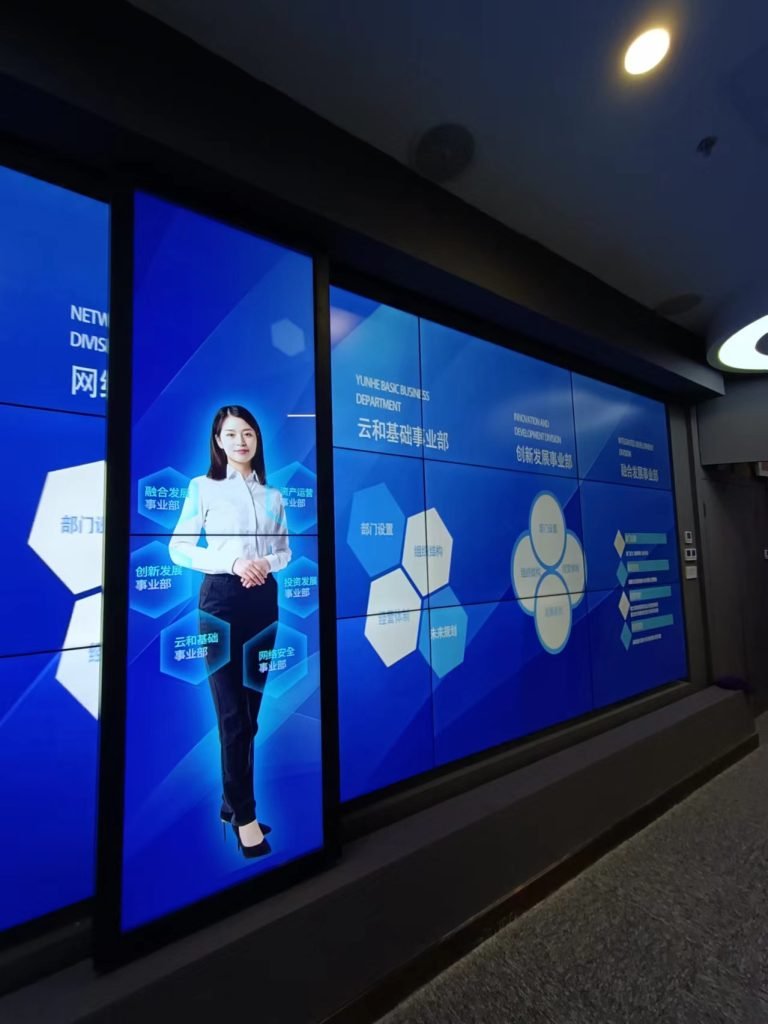
- 🤖 Fusion with Transparent Screens: Blurring the Lines Between Physical and Digital
The magic happens when sliding screens combine with technologies like OLED transparent screens. The screen becomes nearly invisible when off, seamlessly blending into the environment. When activated, digital information overlays the physical scene behind it, creating a stunning “augmented reality” effect. This allows exhibits to remain the focal point while digital content serves as an extended narrative layer, instantly enriching the storytelling. - ⚙️ Upgraded Linkage Mechanisms: From Sliding to ‘Dancing’
Advanced motion control systems have moved sliding screens beyond simple linear motion. High-precision servo motors and customized mechanical structures enable arc movements, precise rotations, and even elegant lifting. The movement of the screen itself becomes a performance, capturing audience attention through sheer ritual and spectacle. - 🧠 AI Empowerment: From Passive Response to Active Perception
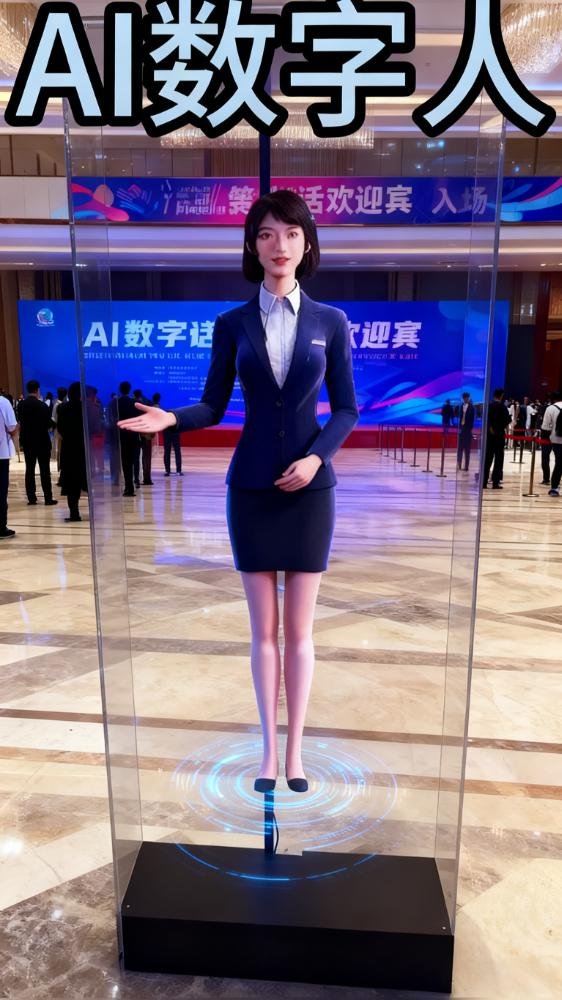
This is the step that gives sliding screens a “brain” and “senses.” By integrating AI vision recognition, voice interaction, and multi-modal sensing algorithms, the screen can detect a viewer’s presence, recognize gestures, and understand voice commands. This transforms the interaction from “passive triggering” to “active engagement,” allowing for personalized content delivery tailored to different viewers—truly achieving a customized guided experience.
Application Scenarios: Redefining Spatial Interaction
The deep integration of these three technologies has given rise to stunning applications:
- Commercial Spaces: In luxury retail, an arc-sliding system combined with a transparent screen can activate automatically as a customer approaches. Using AR technology, it can showcase 3D product explosions or virtual try-ons, transforming shopping into an immersive brand exploration.
- Cultural & Tourism Venues: In museums, AI-driven sliding screens act as top-tier docents. When positioned before an artifact, the screen not only auto-plays in-depth commentary but can also rise, rotate, or coordinate with other screens to dynamically deconstruct the artifact’s structure, making complex knowledge intuitive and engaging.
- Public Facilities: In airports and train stations, sliding screens with dual-sided displays can serve multiple passenger flows simultaneously for information guidance. Their robust and energy-efficient design perfectly meets the high-intensity, high-standard demands of transportation hubs.
Future Outlook
The future sliding screen will not be a single device, but a distributed network of intelligent interactive nodes. They will perform complex narrative tasks autonomously within a space through cloud coordination, becoming dynamic bridges connecting the physical world and the digital universe.
Leave a Reply