
Imagine attending a virtual product launch from your living room, inspecting a digital prototype on your factory floor, or receiving real-time guidance from an overseas expert—all through augmented reality. This is no longer science fiction; it’s the new reality of business.
As digital transformation accelerates, interactive Augmented Reality (AR) is fundamentally changing how companies engage with customers, train employees, and optimize operations. By seamlessly blending digital content with the physical world, AR is breaking down barriers between virtual and real environments, creating unprecedented opportunities across marketing, training, and customer service.
From retail to manufacturing, healthcare to education, businesses are embracing what industry leaders call the “AR-first” approach. According to IDC, global spending on AR and virtual reality (VR) reached $36 billion in 2023 and is projected to exceed $74 billion by 2026, representing a compound annual growth rate of 21.6%.
01 Revolutionizing Product Visualization
Traditional product displays—limited to static images or 2D videos—often fail to convey scale, detail, or context. Interactive AR transforms this experience, allowing customers to view products from every angle, explore features in depth, and even visualize items in their own space.
IKEA’s “IKEA Place” app exemplifies this shift, enabling users to place true-to-scale 3D models of furniture in their homes. The result? Shoppers who engage with AR experiences spend 85% more time on product pages and show conversion rates approximately 20% higher than those who don’t.
Automotive leaders like BMW have integrated 3D configurators that let customers customize vehicles in real-time, examining everything from interior finishes to wheel designs. This immersive approach doesn’t just attract attention—it builds confidence. Brands using 3D visualization report 40% longer session durations and 35% more qualified leads.
02 Creating Immersive Brand Experiences
AR is redefining marketing by turning passive observers into active participants. Unlike traditional advertising, AR experiences generate deeper emotional connections and significantly higher recall rates.
At a recent international trade fair, Shanghai-based Yuanjie Technology demonstrated its “Mixed Space Studio” platform, which enables businesses to quickly build blended reality environments. One application transformed Beijing’s Shougang Park into an interactive retail district, where visitors using AR-enabled devices could explore digital storefronts, join virtual product launches, and engage with branded content.
Similarly, companies like Flying Eye Reality are enabling “pop-up” AR stores that overlay physical locations with digital commerce opportunities. Consumers can browse virtual shelves, access exclusive promotions, and receive hyper-targeted offers based on their real-world context and behavior.
03 Transforming Industrial Operations
In industrial settings, AR is driving unprecedented gains in efficiency and safety. Remote collaboration platforms equipped with AR annotations are slashing downtime and reducing travel costs.
Yuanguang Software’s AR remote assistance platform combines digital twin technology with real-time annotation tools. Field technicians can share their perspective with off-site experts, who can then provide visual guidance directly in their line of sight. This approach has proven particularly valuable for complex maintenance procedures, quality inspections, and equipment installations.
The training sector has seen equally impressive results. Boeing implemented VR training for aircraft wiring assembly and found that trainees using immersive technology completed tasks 30% more accurately and required 50% less training time. In high-stakes environments like healthcare and energy, AR glasses from companies like Rokid are providing hands-free access to critical information, improving both precision and safety.
04 Reinventing Customer Guidance and Support
AR-powered navigation and support are eliminating traditional friction points in customer journeys. 3D virtual showrooms and AR wayfinding are creating seamless experiences that bridge online and offline channels.
Nike’s Nike Fit service uses AR and 3D scanning to help customers find perfectly fitting footwear, dramatically reducing return rates. Real estate developers like Vanke and Longfor have launched interactive 3D sales centers, allowing potential buyers to tour properties, customize finishes, and even calculate mortgage payments—all from their smartphones.
According to industry research, 68% of homebuyers who used 3D viewing tools reported a better experience than traditional browsing, leading to a 40% increase in serious inquiries.
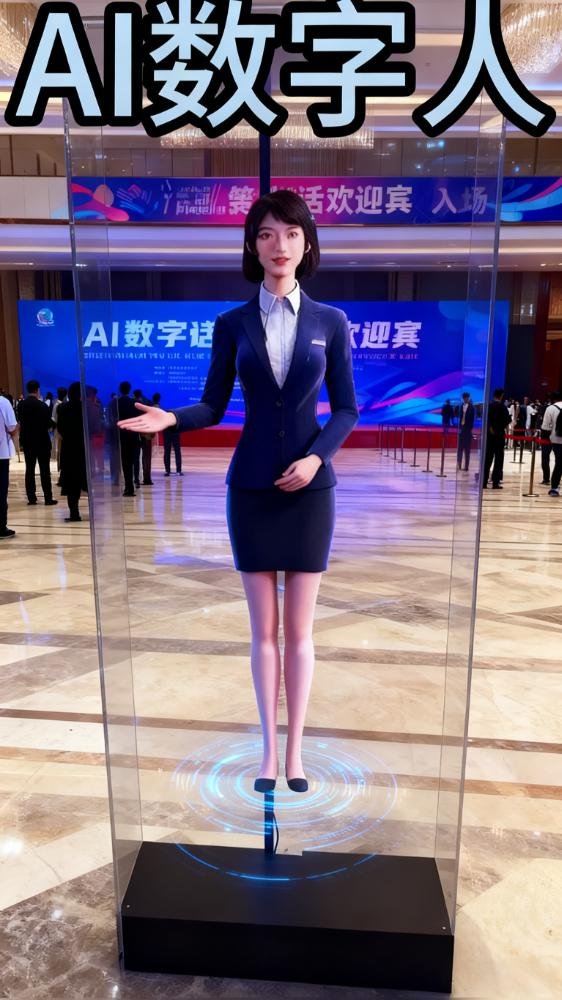
In multilingual environments, AR is breaking down language barriers. At international events, Rokid’s smart glasses provide real-time translation, enabling seamless communication between speakers of different languages.
05 The Future of AR in Business
As 5G networks expand and hardware costs decline, AR technology will become increasingly accessible and powerful. What begins as innovative pilot projects will quickly evolve into essential business tools.
Companies exploring AR should focus on high-impact use cases that align with strategic objectives—whether that’s launching innovative products, training critical personnel, or delivering exceptional customer service. Data security and privacy protection remain essential considerations, particularly when handling customer behavior data or sensitive industrial information.
Looking ahead, the integration of artificial intelligence and spatial computing will make AR experiences more intuitive and responsive. Voice commands, predictive suggestions, and adaptive interfaces will transform AR from a novelty into a natural extension of how we work and live.
The business landscape of tomorrow won’t be limited by physical constraints—any location can become a virtual store, training center, or collaboration space through AR. Companies like Flying Eye Reality are already transforming shopping malls, stadiums, and campuses into GPS-based AR retail environments.
The blended reality future is closer than it appears. Businesses that embrace AR today aren’t just experimenting with new technology—they’re shaping the future of commerce, collaboration, and customer experience. The question isn’t whether your company will adopt AR, but how soon you’ll start leveraging its transformative potential.
Leave a Reply