
In an era where audience attention is the ultimate currency, interactive technologies are transforming product launches from passive presentations into immersive dialogues. These innovations are rewriting the rules of engagement, creating memorable experiences that resonate long after the event concludes.
At the recent Dubai Airshow, Lufthansa Technik’s “Smart Foldable Tray Table” revealed the future of interactive design: a hidden touchscreen display seamlessly integrated into a conventional-looking tray table. When inactive, it appears as ordinary furniture; when activated, it transforms into a multifunctional interface for flight maps, meal ordering, and entertainment control. This philosophy of “invisible technology” represents the new paradigm for high-end product launches—where technology enhances rather than disrupts the experience.
01 Innovative Applications: Where Technology Meets Audience Engagement
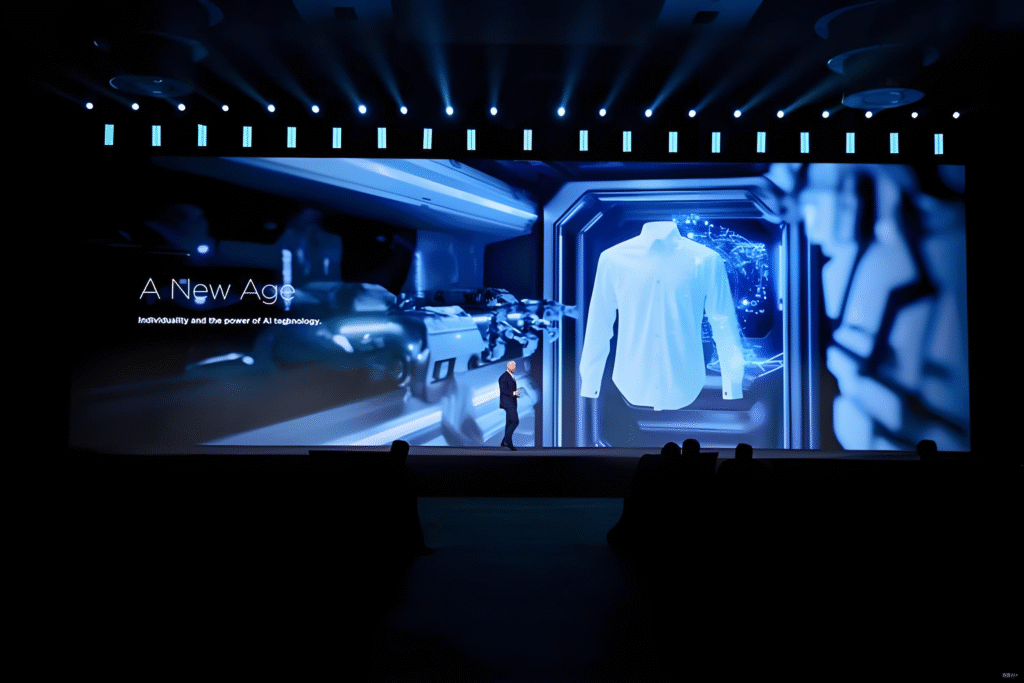
Modern product launches have evolved into sophisticated ecosystems of interactive experiences that engage audiences on multiple levels.
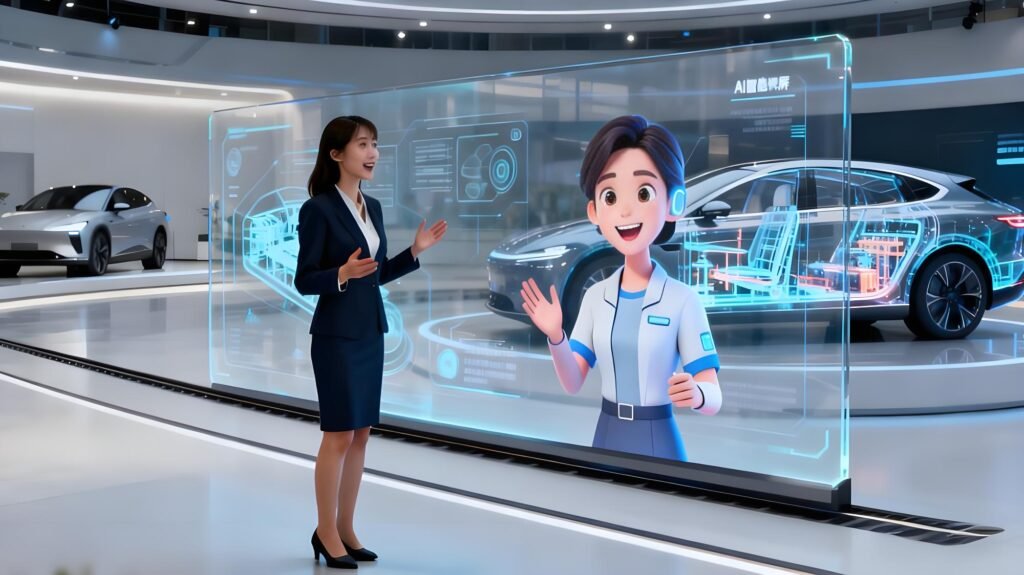
Holographic displays and virtual presenters are revolutionizing how products are introduced. Drawing from technologies like Dipal’s directional holographic displays, virtual characters can appear to float in space without requiring special glasses. When integrated into product launches, this enables naked-eye 3D interaction with virtual products or brand ambassadors, creating unforgettable visual moments that conventional presentations cannot match.
Intelligent robotics and embodied interaction bring dynamic energy to the stage. In China’s pavilion plan for Expo 2025 Osaka, over ten portable intelligent robots will perform coordinated dances, captivating audiences while serving as interactive guides. These robots function as autonomous participants rather than static displays, maintaining precise movements and responses even in complex environments.
Airborne imaging and private interfaces address critical presenter challenges. Technologies like Donut’s aerial imaging prompters display notes visible only to the speaker, maintaining audience connection while ensuring presentation accuracy. The same technology enables interactive product exploration, allowing participants to manipulate floating 3D models through gesture controls.
Multimodal sensing and personalization create tailored experiences for each attendee. Lufthansa’s hidden touchscreen technology can integrate with various materials including wood and carbon fiber, remaining invisible until needed. When combined with facial recognition and emotion analysis, these systems can adapt content in real-time based on audience reactions, creating uniquely personal experiences.
02 Strategic Value: Why Interactive Installations Deliver Results
Beyond technological spectacle, interactive installations have become strategic tools for achieving key business objectives.
Enhanced information retention stands as a primary benefit. Through multi-sensory stimulation combining visual, auditory, and tactile elements, complex concepts become intuitively understandable. As Lufthansa Technik VP Andrew Muirhead notes: “We’re permanently rethinking how technology integrates with interior design to create more cohesive and natural interactions.” This integration helps audiences grasp product innovations more rapidly and completely.
Breaking down communication barriers transforms monologues into dialogues. Traditional launches often limit audience participation, while interactive elements like real-time polling, Q&A sessions, and social walls enable genuine two-way communication. This transforms attendees from passive observers into active participants, significantly boosting engagement metrics.
Creating immersive storytelling experiences strengthens brand recall. Through dynamic narrative pathways, audiences can choose their own exploration routes through content. This personalized approach not only prevents congestion but ensures each participant forms unique memories associated with the brand.
Amplifying media reach and social sharing extends the launch’s impact. Visually striking interactive installations naturally encourage social media sharing. Technologies like Dipal’s holographic interaction cabins have become “phenomenal exhibits” that attendees line up to experience and share online, generating organic publicity that extends far beyond the physical event.
03 Technology Foundations and Future Directions
The seamless experiences enabled by interactive installations rely on sophisticated technological infrastructures working in concert.
Spatial computing continues to mature rapidly, enabling digital content to interact seamlessly with physical environments. Both holographic projections and aerial imaging depend on precise spatial positioning and real-time rendering capabilities to maintain the illusion of digital objects occupying real space.
Multimodal interaction fusion represents the next frontier in user experience. By combining gesture, eye-tracking, and voice commands, systems can understand user intent more accurately. Lufthansa’s hidden touchscreen exemplifies this approach—remaining invisible until needed while providing full functionality.
AIGC and generative AI are dramatically reducing the cost of producing high-quality interactive content. Whether generating natural dialogue for virtual hosts or creating personalized product demonstrations, AI technologies enable responsive, tailored experiences for each participant.
Looking ahead, three key trends are emerging:
- Advanced emotional intelligence: Systems will not only recognize emotions but anticipate user needs, offering personalized services proactively.
- Seamless integration and invisibility: As hardware shrinks, interactive technologies will blend more naturally into environments.
- Sustainability and ESG alignment: Paperless interfaces and energy-efficient designs align with corporate environmental values.
04 Challenges and Considerations for Implementation
Despite their potential, interactive installations present significant implementation challenges that require careful management.
Technical reliability remains paramount. Network latency or equipment failures in complex environments can undermine the entire experience. This demands robust backup systems and responsive technical support teams, particularly for large-scale events where any failure becomes immediately visible.
Cost and accessibility continue to present barriers. Advanced technologies like holographic projection and robotics remain primarily accessible to major launches. However, as solutions like MAXHUB’s meeting systems demonstrate, standardization is gradually making these technologies more accessible to mid-sized events.
Privacy and ethical considerations require thoughtful handling. Technologies like facial recognition and emotion analysis, while enabling personalization, raise important questions about data collection and usage. Transparent privacy policies and clear data usage agreements have become essential components of responsible implementation.
05 Conclusion: From Technological Demonstration to Value Creation
The role of interactive installations in product launches has fundamentally evolved—from attention-grabbing novelties to essential vehicles for communicating core value.
As Lufthansa Technik’s Andrew Muirhead astutely observed: “There appears to be a disconnect between how airlines design control solutions and how passengers actually interact with the cabin environment.” This insight applies equally to launch design: successful technology integration must be grounded in deep understanding of authentic audience needs.
From virtual presenters to aerial imaging, from intelligent robotics to emotion-aware systems, interactive installations have moved from the periphery to the center of the launch experience. They represent not just technological capability but emotional bridges connecting brands with audiences. The future of product launches will increasingly blur the boundaries between physical and digital, transforming every attendee into an active participant and co-creator of the story—the most profound change interactive technology brings to the events industry.
Leave a Reply