
— Exploring the Magic of Multimedia Interactive Installations and Projection
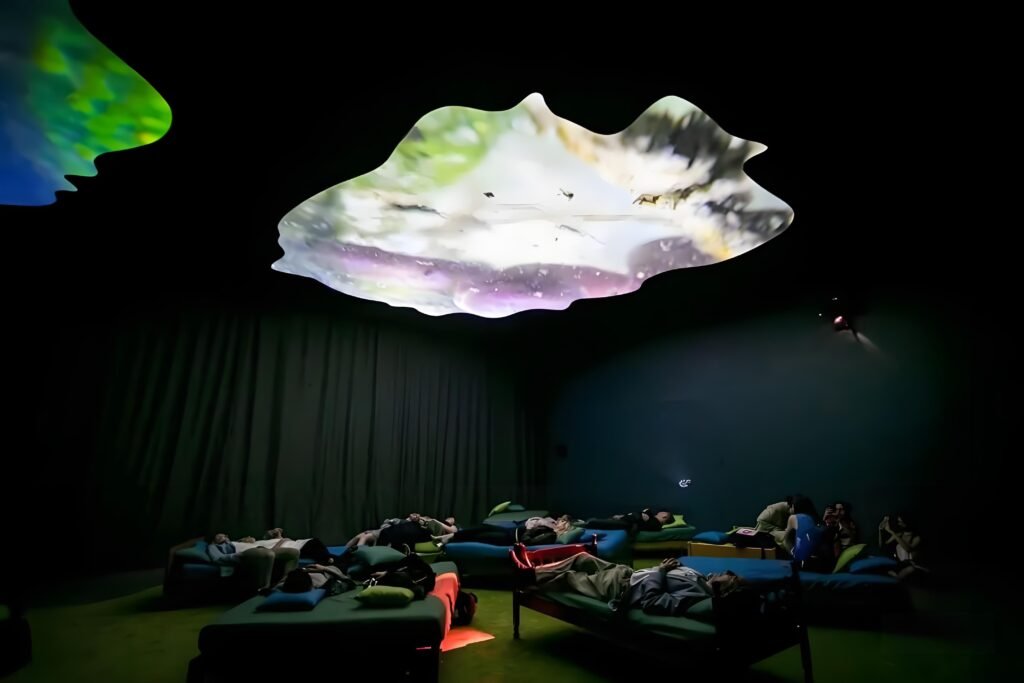
When Walls Come Alive: The Rise of Interactive Light and Shadow Art
Light no longer just illuminates our spaces—it communicates. Shadows have evolved beyond simple outlines into dynamic storytellers. Where technology and art converge, walls begin to dance, floors burst into bloom, and entire environments transform into living canvases that speak to us.
Across the globe, a creative revolution is unfolding. From museum halls to urban parks, from historic sites to commercial centers, multimedia interactive installations are fundamentally changing how we experience spaces. These technologies turn static environments into dynamic narrative fields, transforming passive viewers into active participants. Consequently, this fusion of technology, aesthetics, and emotion has become an essential language in today’s international art scene.
I. The Technology Behind the Magic
At its core, interactive light art relies on three key technological pillars working in harmony.
Perception systems serve as the project’s eyes. Advanced 3D cameras and sensors, such as the Orbbec Femto Bolt, track human movements with remarkable precision. These devices capture subtle gestures and translate them into digital data.
Real-time rendering then brings this data to life. Using game engines like Unity and creative coding platforms like TouchDesigner, artists instantly convert sensor readings into visual responses. This creates a seamless cycle of movement, computation, and presentation.
Finally, projection mapping transforms ordinary surfaces into extraordinary displays. Through careful calibration, even irregular building facades become perfect canvases. For instance, the 3D mapping show at Tang Anxi Frontier Command cultural park effectively “revived” ancient walls, vividly narrating the rich history of Qiuci culture.
II. Global Showcase: Spaces Transformed
Diverse projects worldwide demonstrate how interactive Light and Shadow Art activates different environments:
1. Reimagining Public Spaces
Malaysia’s Penang Waterfront Promenade transforms each evening into an interactive wonderland. Twenty-five projectors cast over seventy different animations across a 142-meter walkway. As visitors walk, their footsteps trigger ripples, flowers, and heart patterns—turning a simple stroll into creative play.
Similarly, Poland’s “FLUX” installation by KsaweryKomputery Studio envelops viewers in a stunning light waterfall. Using 4,800 meters of LED strips refreshing at 100 frames per second, the work creates a fully immersive environment of flowing light and sound.
2. Cultural Heritage Reborn
Germany’s “Shadow Resonance” touring installation presents semi-transparent spheres that travel through Bavarian landscapes. These spheres creatively distort and recompose shadows from trees and performers, beautifully blurring the line between historical architecture and contemporary art.
Meanwhile, Shanghai’s West Bund Dome projection show uses a massive 3,000㎡ dome as its canvas. Ultra-high-definition projections present urban cultural themes, featuring an AI-generated character named “Little Spark” that guides viewers through the narrative.
3. Education Revolutionized
In educational settings, these technologies make abstract concepts tangible. The UK’s Oldham College uses a 360° projection system called “Imaginarium” to transport students to different worlds—from ocean depths to outer space—helping them understand complex subjects through direct experience.
Likewise, America’s BASE Xperiential Holographic Theater allows students to interact with life-sized dinosaurs without special glasses. This transforms learning spaces into unforgettable adventures that spark curiosity and engagement.
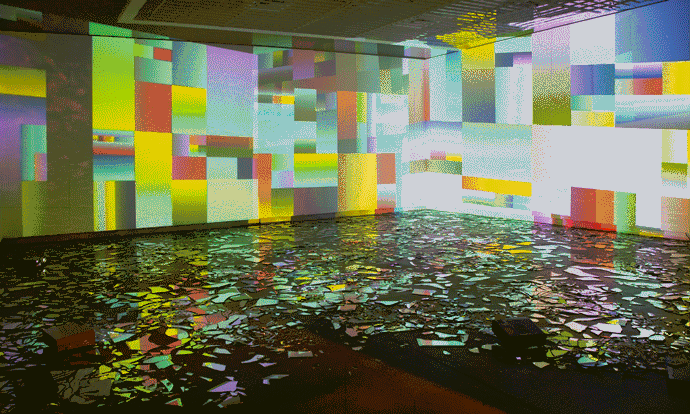
III. Future Directions: Smarter, Deeper, Greener
Looking ahead, three key trends are shaping the evolution of interactive light art.
Artificial intelligence is revolutionizing content creation. For example, teams at the Shanghai Light and Shadow Festival trained AI models on traditional Chinese aesthetics. This approach generated culturally resonant visual elements while significantly lowering creative barriers.
Additionally, the field is shifting from visual spectacle to emotional connection. Poland’s “We Are One” installation, for instance, merges audience portraits with light effects. The result functions as a “digital altar” that fosters collective resonance among participants.
Meanwhile, sustainability concerns are driving innovation. As large-scale LED systems consume substantial energy, creators like KsaweryKomputery are experimenting with hardware optimization and improved control protocols. Their goal is to balance visual impact with energy efficiency.
IV. Guidance for Aspiring Creators
For those entering this field, several principles prove valuable.
First, technology should always serve the narrative. No matter how dazzling the projections, they risk becoming empty spectacles if disconnected from meaningful content.
Second, interaction design must feel intuitive. The best experiences, like Malaysia’s responsive walkway, feel as natural as breathing.
Finally, embracing collaboration accelerates progress. Open-source initiatives, such as the “Light and Shadow Corridor” project on GitHub, demonstrate how shared resources benefit the entire creative community.

The True Power of Light and Shadow
Ultimately, this art form’s purpose isn’t to overwhelm with technological wizardry. Rather, it creates precious moments for pause, reflection, and connection. When children chase light patterns on an interactive walkway, or when visitors witness history projected onto ancient walls, something magical occurs. In these moments, technology and art merge into a gentle bridge—connecting us to each other and to the world we share.
Leave a Reply