
In today’s art world, interactive projection has evolved from cold technological demonstration to becoming a bridge connecting audiences with artworks, creating unforgettable sensory experiences.
At a recent immersive digital art exhibition in Tokyo, visitors found themselves surrounded by a dynamic world of projection-mapped artwork. Masterpieces transformed across dozens of surfaces, classical paintings seemingly coming to life through motion and interaction.
Visitors could pick up digital brushes to create artwork that instantly animated through AR scanners, allowing direct interaction with their creations. This fusion of technology and art represents the revolutionary impact interactive projection is making across the global art scene.
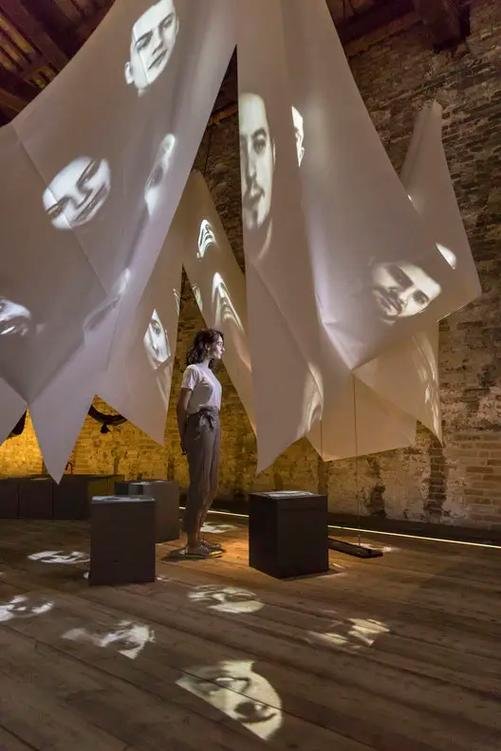
01 The New Language: Diverse Applications of Interactive Projection
Interactive projection technology has found multifaceted applications in contemporary art, primarily through four innovative forms.
Projection mapping brings static objects to dynamic life. In one international exhibition, participants could interact with historical structures through motion-sensitive projections that transformed based on visitor movement, blending entertainment with historical education in what creators call “edu-tainment.”
Immersive environment creation represents another significant application. Major museums now use 270° and 360° projection systems to wrap entire spaces in flowing artistic environments where visitors stand surrounded by moving imagery, accompanied by spatial audio that enhances the sensory experience.
Motion-sensing interactive installations further break down barriers between audience and artwork. In TeamLab’s “Future Park” exhibitions, all patterns and text elements are projected onto surfaces that visitors can manipulate with their hands—creating, pushing, changing, or eliminating projected elements through physical interaction.
Augmented reality integration shows tremendous potential. Children coloring physical pages can see their creations scanned and brought to life in projected environments, where they can walk among and interact with their artwork, creating participation levels unmatched by traditional exhibitions.
02 Why Art Embraces Interactive Projection
The art world’s embrace of interactive projection stems from several converging factors.
Technological advancement provides the foundation. The global interactive projection market continues rapid growth, with hardware costs gradually decreasing, making the technology increasingly accessible to artistic institutions.
Evolving audience expectations drive adoption. Traditional static exhibitions struggle to satisfy digital-era audiences craving interaction, participation, and immersive experiences.
Natural evolution of artistic expression motivates creators. Contemporary artists constantly explore new media, with interactive projection offering fresh creative dimensions that transform both artistic practice and audience perception.
Enhanced educational potential adds significant value. Interactive installations allow “learning through play,” dramatically improving knowledge retention compared to passive observation.
03 Multidimensional Value: Transforming Visitor Experience
Interactive projection art creates multiple forms of value that transcend traditional art viewing.
Educational value emerges through engaging knowledge transmission. Participants learn through direct interaction with content, whether historical information or conceptual understanding, making the learning process both effective and enjoyable.
Emotional value develops through new relationships between viewers and art. When visitors’ creations become part of an exhibition, or their movements alter projected content, the resulting sense of ownership generates powerful feelings of connection and achievement.
Social value represents another crucial contribution. Unlike the isolated experience of traditional art viewing, interactive projection encourages collaboration and shared experience among participants, with many installations becoming more engaging as more people join the interaction.
Memorable impact distinguishes these experiences. Multi-sensory participation creates stronger memory formation, making interactive exhibitions more memorable than passive viewing.
04 Strengths and Challenges: The Dual Nature of Interactive Projection
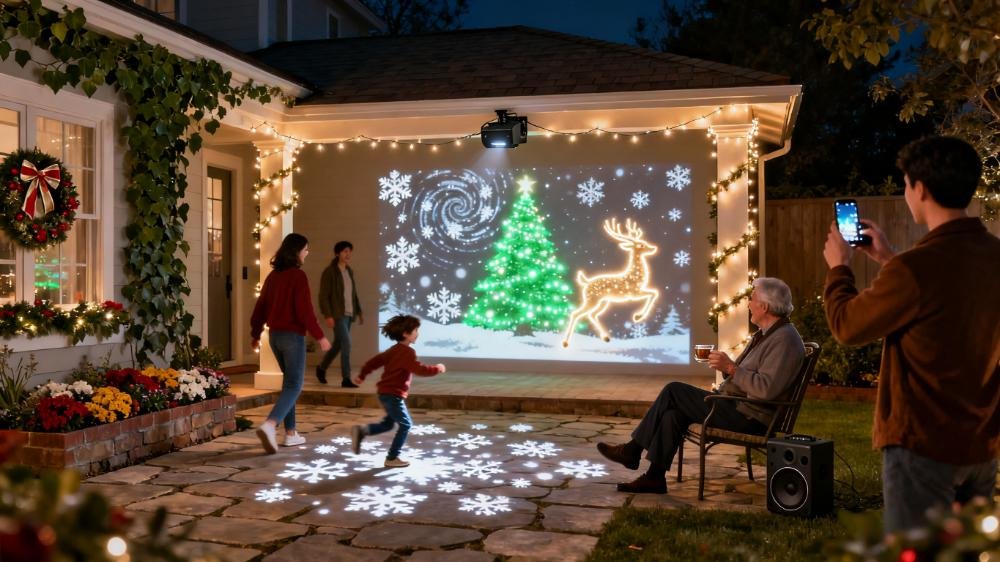
Interactive projection in artistic contexts presents both significant advantages and notable challenges.
Advantages
Eliminating viewing distance stands as a primary benefit. While traditional art often requires respectful distance, interactive projection invites touch, participation, and even transformation of artworks.
Enhanced engagement proves consistently measurable. Visitors spend considerably more time with interactive projections compared to traditional exhibits, with engagement times increasing dramatically.
Improved art accessibility helps audiences grasp complex artistic concepts by transforming abstract ideas into tangible experiences that communicate through multiple sensory channels.
Shareability extends exhibition reach. Novel interactive formats encourage visitors to capture and share their experiences through social media, amplifying exhibition visibility.
Challenges
Technical limitations present ongoing difficulties. The reliance on complex technology means equipment failures can completely undermine the artistic experience.
High costs create barriers to access. The sophisticated technology required confines many immersive exhibitions to specific venues and timeframes, unlike traditional exhibitions that can travel more easily.
Sensory overload remains a concern. Extended immersion in high-intensity sensory environments may affect visitor wellbeing.
Technology overshadowing art poses an artistic risk. When mishandled, technological spectacle can overwhelm artistic substance, resulting in visually impressive but conceptually shallow works.
05 Future Directions: The Evolving Role of Interactive Projection
As technology advances, interactive projection’s artistic future shows several clear trajectories.
Technology integration will become standard. Interactive projection will increasingly blend with virtual reality (VR), augmented reality (AR), and artificial intelligence to create richer experiences. The growing 360° immersive projection market signals demand for increasingly enveloping artistic environments.
Application expansion will continue. Interactive projection is spreading beyond art exhibitions into education, tourism, and corporate events, with research indicating rapid growth across multiple sectors.
Personalization and intelligence will enhance experiences. Advances in AI will enable projections that adapt in real-time to visitor responses, creating uniquely personalized artistic encounters for each participant.
Sustainable art preservation will gain importance. For delicate artworks unsuitable for frequent display, interactive projections offer alternative access while protecting originals from damage, representing an environmentally conscious approach to art preservation.
In TeamLab’s exhibitions, when a child’s drawing transforms into a projected animation that other visitors can interact with, the wonder in their eyes reminds us that the fusion of art and technology isn’t about technical spectacle, but about touching fundamental human emotions and creativity.
Interactive projection technology is reshaping how we experience art, transforming static observation into dynamic dialogue, passive reception into active exploration. As one creator noted, these experiences don’t emerge from sudden inspiration but through “repeated investigation, discussion, and refinement.”
The future of interactive projection in art promises even deeper integration into our cultural experiences, making art not something we merely observe, but something we live and create together.
Leave a Reply