
Watch children’s drawings leap off the page and onto walls, transforming creativity into a dynamic digital playground.
What Exactly Is This Technology?
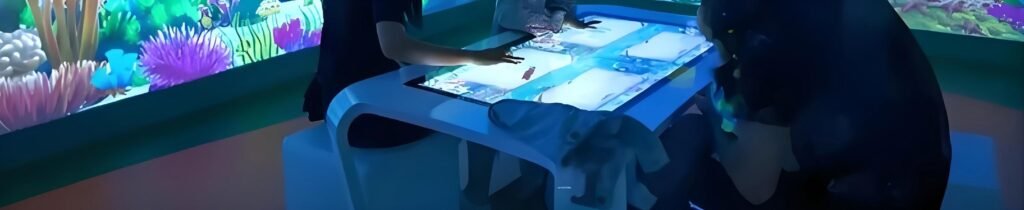
Interactive doodle projection software brings children’s artwork to life through digital animation. First, children create physical drawings. Then, they scan or upload their artwork into the system. Next, specialized software processes and animates these drawings. Finally, projectors display these animations onto walls or floors. Essentially, this technology turns simple sketches into interactive game elements, perfectly merging physical art with digital play.
How the System Actually Works
The system operates through three simple but coordinated stages:
Step 1: Capture & Digital Conversion
Children begin by creating artwork on paper. Then, they scan their drawings using a simple scanner or tablet. This process converts physical art into digital format while preserving each child’s unique creative expression.
Step 2: Animation & Integration
Next, the software analyzes the digitized drawings. It extracts key shapes and outlines to create movement. For example, a drawn car might start driving, or a butterfly could begin flying. These animated elements then integrate into a larger, projected interactive scene.
Step 3: Projection & Interaction
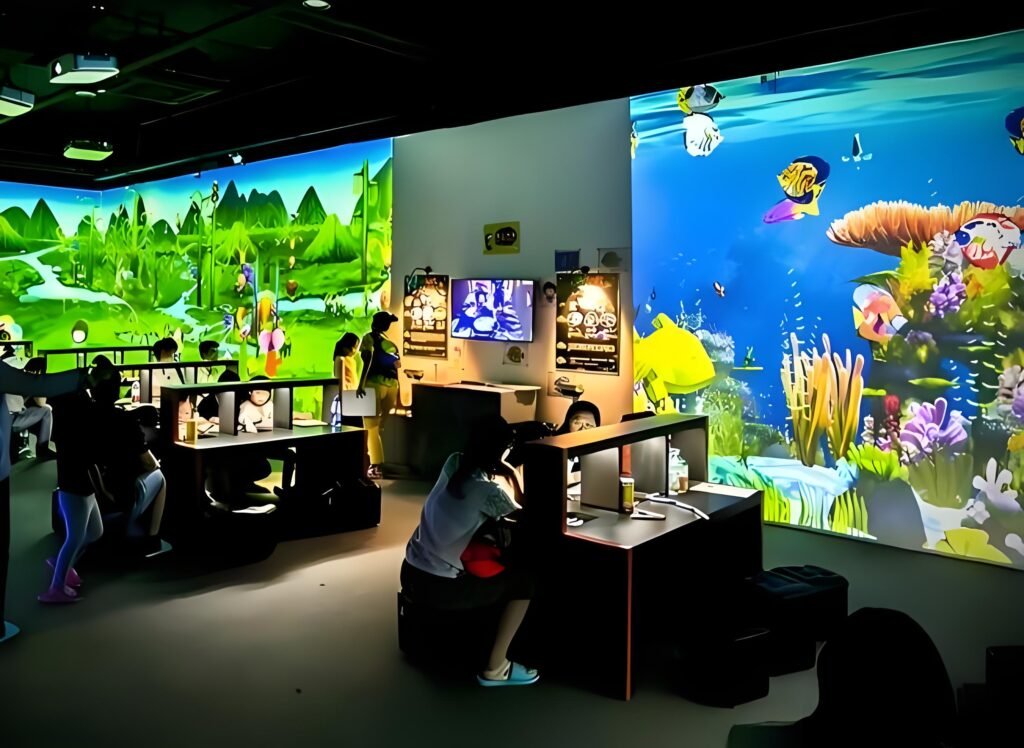
Finally, a projector displays the animated characters onto walls or floors. Meanwhile, motion sensors track children’s movements, allowing real-time interaction with their creations. Some advanced systems even use multiple projectors to minimize shadows and enhance the experience.
Key Benefits for Indoor Play Areas
This technology offers significant advantages for Southeast Asian play zones:
Increased Customer Appeal
These interactive walls strongly attract families. They provide unique entertainment that stands out from traditional play areas. Consequently, businesses see longer visits and more repeat customers.
Educational Value
The system cleverly combines play with learning. It encourages creativity, problem-solving, and basic digital literacy. Therefore, it perfectly matches growing parental interest in educational entertainment.
Space Efficiency
The projected play area requires minimal physical equipment. This makes it ideal for space-constrained urban settings. Additionally, it reduces shared physical toys, improving overall hygiene.
Content Flexibility
Operators can easily update game themes and animations. This approach keeps the play area fresh and engaging. It also allows customization for local Southeast Asian festivals and cultures.
Important Considerations
However, you should also understand these practical aspects:
Initial Investment
Setting up requires significant upfront costs. These include projectors, sensors, computers, and software licensing.
Technical Maintenance
The system isn’t “set and forget.” Projectors need regular maintenance, and software requires updates. Therefore, reliable technical support is crucial for smooth operation.
Material Management
While the play is digital, children still create physical drawings. So you’ll need to manage supplies of paper, crayons, and scanning equipment.
Developing Children’s Skills
This interactive format significantly supports child development:
Boosting Creativity
Children see their drawings become part of a living world. This experience powerfully reinforces creative confidence and encourages imaginative thinking.
Enhancing Cognitive Skills
Many games involve problem-solving activities. For instance, navigating drawn characters through challenges helps develop critical thinking and spatial reasoning.
Building Social Skills
Most games support multiple players. Therefore, children learn to take turns, communicate effectively, and collaborate toward common goals.
Frequently Asked Questions
Q1: How much space do we need?
Typically, you need a well-lit wall or floor area of about 3×4 meters. Make sure to avoid direct sunlight, as it interferes with projection quality.
Q2: Can we customize content for different ages?
Yes, absolutely. You can offer simple coloring activities for toddlers and more complex animation games for older children. This flexibility ensures appropriate content for all ages.
Q3: How safe is this system?
The system is very safe. Projectors mount out of reach, and interaction is completely contactless. There are no small parts or sharp edges, ensuring a secure play environment.
Q4: What maintenance is required?
Regular maintenance involves cleaning projector filters and sensor lenses. Also, keep software updated for optimal performance and new features.
Q5: Can it work with other play equipment?
Yes, definitely. The system functions well as a standalone attraction or can complement other play structures through thematic integration.
For Southeast Asian indoor play areas, interactive doodle projection software delivers a futuristic, engaging, and educational experience. It transforms passive drawing into collaborative animated adventures, ensuring your facility becomes the top choice for modern families seeking innovative entertainment.
Leave a Reply