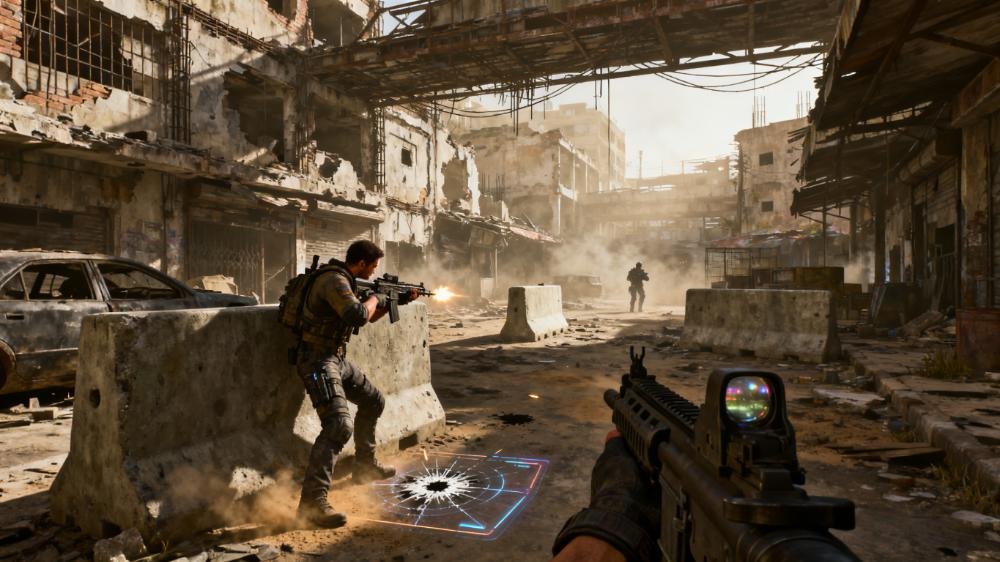
360° Immersive Shooting Games: The Ultimate Interactive Experience
Step into a world where walls disappear and enemies surround you from every angle.
Immersive shooting games have evolved far beyond standard arcade cabinets. Today’s 360° systems place players inside a complete digital environment. Every wall becomes part of the action. This technology creates unforgettable experiences for entertainment venues worldwide.
What Is a 360° Immersive Shooting Game?
A 360° immersive shooting game surrounds players with projected visuals on all sides. Unlike traditional setups with a single screen, these systems use multiple projectors to cover every wall. Players face threats from all directions. They must turn, aim, and react naturally to survive.
This full-body engagement creates unmatched excitement. Players forget they stand in a room. Instead, they feel transported to another world entirely .

How Does the System Work?
The technology relies on precise coordination between multiple components working in real-time.
First, sensors track player movement. Infrared cameras or depth sensors continuously scan the play area. They detect the player’s position, orientation, and gun aiming direction.
Then, software processes this data instantly. A powerful media server analyzes where the player looks and shoots. It calculates exactly how the visuals should respond.
Finally, projectors update the display. The system projects the correct viewpoint onto every wall simultaneously. This creates a seamless 360° environment that follows the player’s gaze .
Core Components of the System
A complete 360° immersive shooting system requires several specialized elements working together:
- 360° Projection System: 4-8 high-lumen laser projectors cover all walls with bright, clear imagery
- Motion Tracking Sensors: Infrared or depth cameras capture player movements with precision
- Interactive Controllers: Laser guns or wireless controllers track aiming and firing actions
- Media Server: A high-performance computer runs the interactive software and generates real-time visuals
- Surround Sound System: Multi-channel audio creates directional sound effects for complete immersion
- Projection Surface: Matte white walls or screens ensure optimal image quality
High-end commercial systems like the one featured on The Gadget Show used five HD projectors to create a fully immersive 360° environment .
Space Requirements for Installation
Proper space planning is essential for a successful installation. The minimum recommended area for a single-player 360° immersive shooting game is 3 meters by 3 meters .
| Configuration | Minimum Space | Ceiling Height | Ideal For |
|---|---|---|---|
| Single Player | 3m x 3m (9 m²) | 2.7-3.5m | Compact venues, solo experiences |
| Dual Player | 4m x 4m (16 m²) | 2.7-3.5m | Cooperative gameplay |
| Multi-Player Arena | 6m x 6m+ (36+ m²) | 3.5m+ | Team battles, large groups |
Ceiling height matters for sensor placement. Most tracking systems require 2.7-3.5 meters of clearance . The space should also remain free of reflective surfaces that might interfere with optical tracking.
Main Application Scenarios
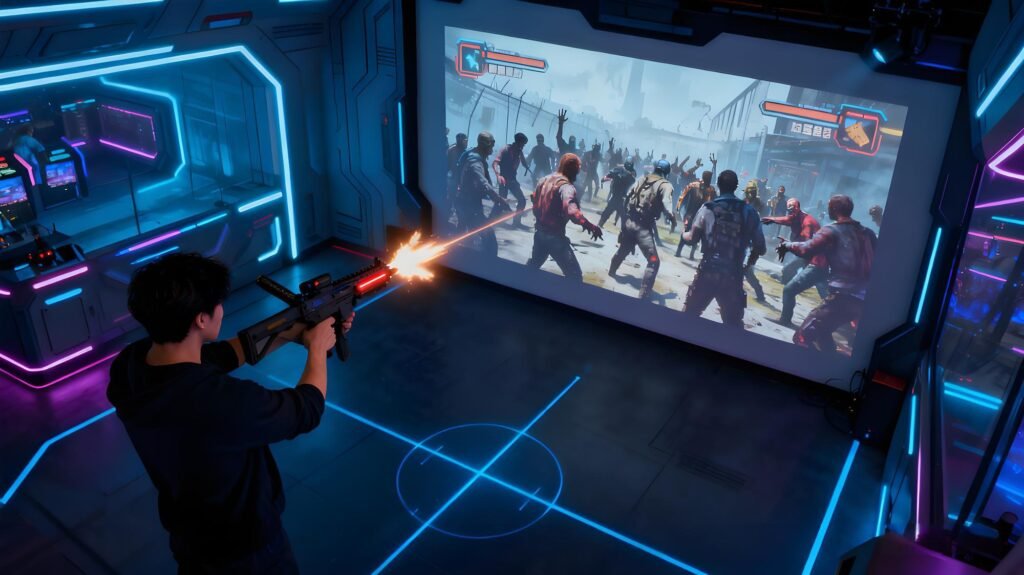
360° immersive shooting games work wonderfully across multiple settings:
Entertainment Centers and Arcades
These systems serve as flagship attractions in family entertainment centers (FECs) and arcades. They draw crowds with their novelty and immersive power. Multiplayer support encourages group visits and repeat plays .
Theme Parks and Tourist Attractions
Large venues use 360° systems as premium experiences. They command higher ticket prices and create memorable moments that visitors share on social media.
Corporate Events and Team Building
Companies book these experiences for team-building events. Cooperative shooting games require communication and coordination, strengthening workplace relationships.
Training and Simulation
Military and law enforcement agencies use similar technology for tactical training. These systems recreate high-pressure scenarios safely while tracking performance metrics .
Educational Institutions
Schools and universities integrate immersive shooting games into STEM programs. Students learn about physics, programming, and human-computer interaction through hands-on gameplay .
Advantages and Limitations
| Advantages | Limitations |
|---|---|
| Complete immersion with 360° visuals surrounds players entirely | Higher initial investment than single-screen systems |
| Full-body engagement encourages physical activity | Requires controlled lighting for optimal image quality |
| Multiplayer support drives social interaction and repeat visits | Professional installation needed for precise calibration |
| Endless content variety through software updates | Larger space requirements than compact arcade cabinets |
| Strong revenue potential with premium pricing | Regular maintenance of projectors and sensors |
One notable example from The Gadget Show even incorporated paintball guns to simulate being hit, though this extreme feedback requires protective gear .
Frequently Asked Questions
What are the key features of 360° immersive shooting games?
Key features include full surround projection, precise motion tracking, interactive gun controllers, multiplayer support, and rich audio effects. Advanced systems offer haptic feedback and dynamic difficulty adjustment .
Are these systems safe for children?
Yes, with proper supervision and safety protocols. The interaction is contact-free with no physical projectiles. Operators should establish clear safety guidelines and age restrictions based on game content .
How many players can participate at once?
Most systems support 2-4 players simultaneously. Larger arena configurations can accommodate up to 8 players for team-based experiences .
Can the game content be customized?
Absolutely. Professional providers offer extensive customization options. You can tailor themes, branding, difficulty levels, and even develop entirely new game scenarios .
How often can game content be updated?
Content updates happen through simple software installations. Many providers release new games and scenarios regularly. This keeps the experience fresh for returning visitors .
What maintenance is required?
Routine maintenance includes cleaning projector filters and sensor lenses. Projector bulbs typically last 3,000-5,000 hours before replacement. Professional servicing ensures optimal performance .
Is professional installation necessary?
Yes, for commercial installations. Proper calibration of multiple projectors and sensors requires expertise. Professional installation ensures seamless edge-blending and accurate tracking .
What about ventilation and power requirements?
The space needs adequate ventilation for projection and computing equipment. Dedicated power circuits with surge protection are recommended for reliable operation .
Conclusion
360° immersive shooting games represent the pinnacle of interactive entertainment. They transport players into complete digital worlds where action surrounds them from every side. For entertainment venues seeking a standout attraction, this technology delivers unmatched engagement and strong revenue potential.
With proper space planning, quality equipment, and professional installation, these systems become the centerpiece of any entertainment destination.
Leave a Reply