
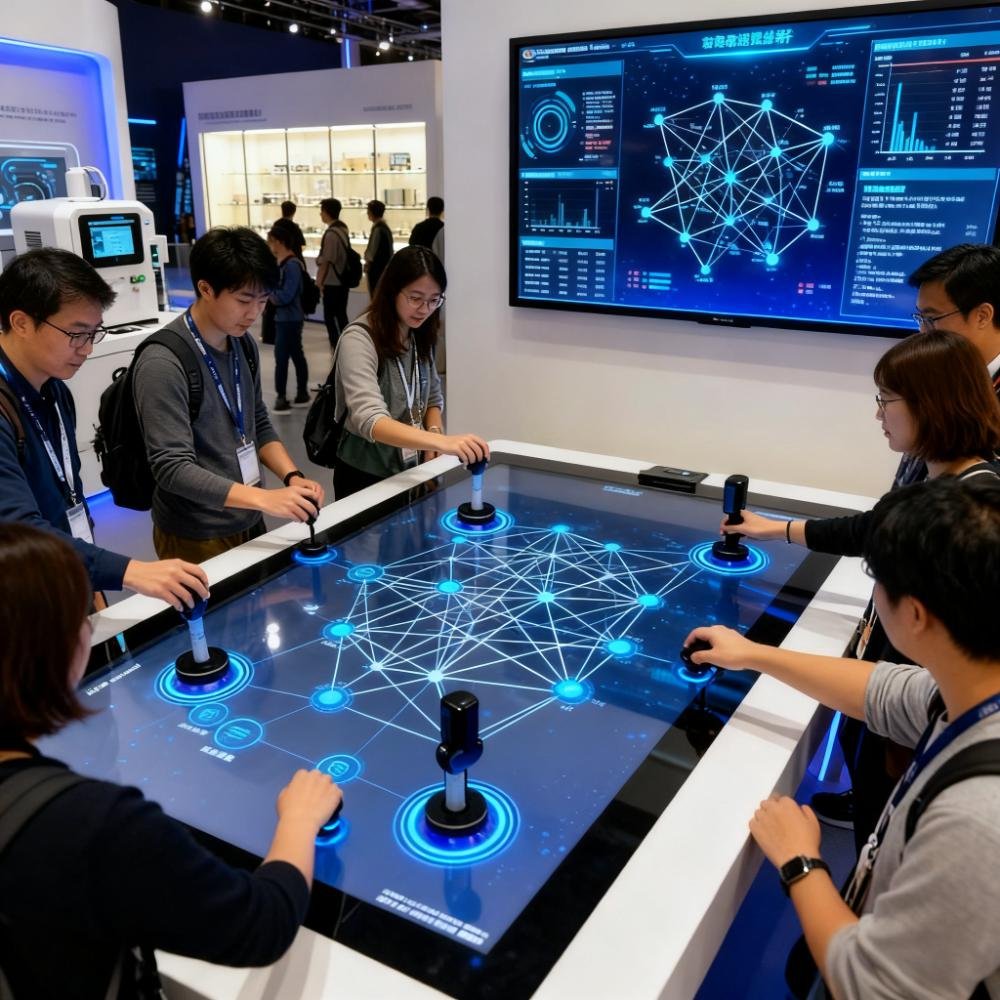
The Object Recognition Table
The Object Recognition Table is an innovative interactive display system that seamlessly bridges physical objects and digital content. By identifying specific items placed on its surface, it instantly triggers and displays corresponding multimedia information such as 3D models, videos, and animations. Ideal for museums, exhibitions, retail spaces, and educational environments, it transforms static objects into dynamic, engaging interactive experiences that captivate audiences through its intuitive blend of real-world touch and digital immersion.
1. Overview & Core Concept
The Object Recognition Table is a cutting-edge interactive solution that merges tangible objects with digital interfaces. Using advanced recognition technology, it detects physical items placed on its surface and responds with enriched digital content—creating a fluid, immersive interaction that enhances learning, engagement, and presentation across various settings.
2. Key Components & Technologies
Recognition System:
Utilizes high-resolution cameras, infrared sensors, or capacitive sensing technology to accurately detect objects, markers, or shapes. Supports fiducial markers (e.g., QR-style codes), NFC tags, or shape-based recognition.Hardware Configuration:
Includes a high-brightness LCD or LED touch display, robust computing unit (e.g., integrated PC or external media server), and optional projection modules. Available in various form factors including rear-projection and multi-touch屏 models.Software & Interface:
Powered by intuitive content management software (CMS), allowing easy upload and scheduling of media. Compatible with 2D/3D graphics, videos, and web-based content. Supports real-time interaction such as rotating, scaling, and dragging digital models.Customization Support:
Customizable UI/UX, recognition triggers, housing design, and screen size. Can be tailored with AR/VR integration and multi-language support.
3. Main Features
Multi-Object & Multi-User Interaction:
Allows several users to interact with different objects simultaneously.Real-Time Feedback:
Provides instant visual and audio responses triggered by object placement or touch.Seamless Physical-Digital Integration:
Combines the tactile experience of handling real objects with dynamic digital storytelling.Easy Content Management:
Update and manage displayed content remotely via a user-friendly CMS.
4. Application Scenarios
Museums & Cultural Exhibits: Artifact exploration, educational games, guided exhibit narratives.
Retail & Showrooms: Product customization, digital catalogs, brand storytelling.
Education & Training: Interactive learning stations, simulation tools, STEM education.
Events & Trade Shows: Engaging brand activations, interactive info points.
5. Customization Options
We offer tailored solutions including custom sizes, housing finishes, recognition logic, and software features to match specific branding or functional requirements.


